Links to other resources: Veterans Program, Medical Detox at Florida Springs
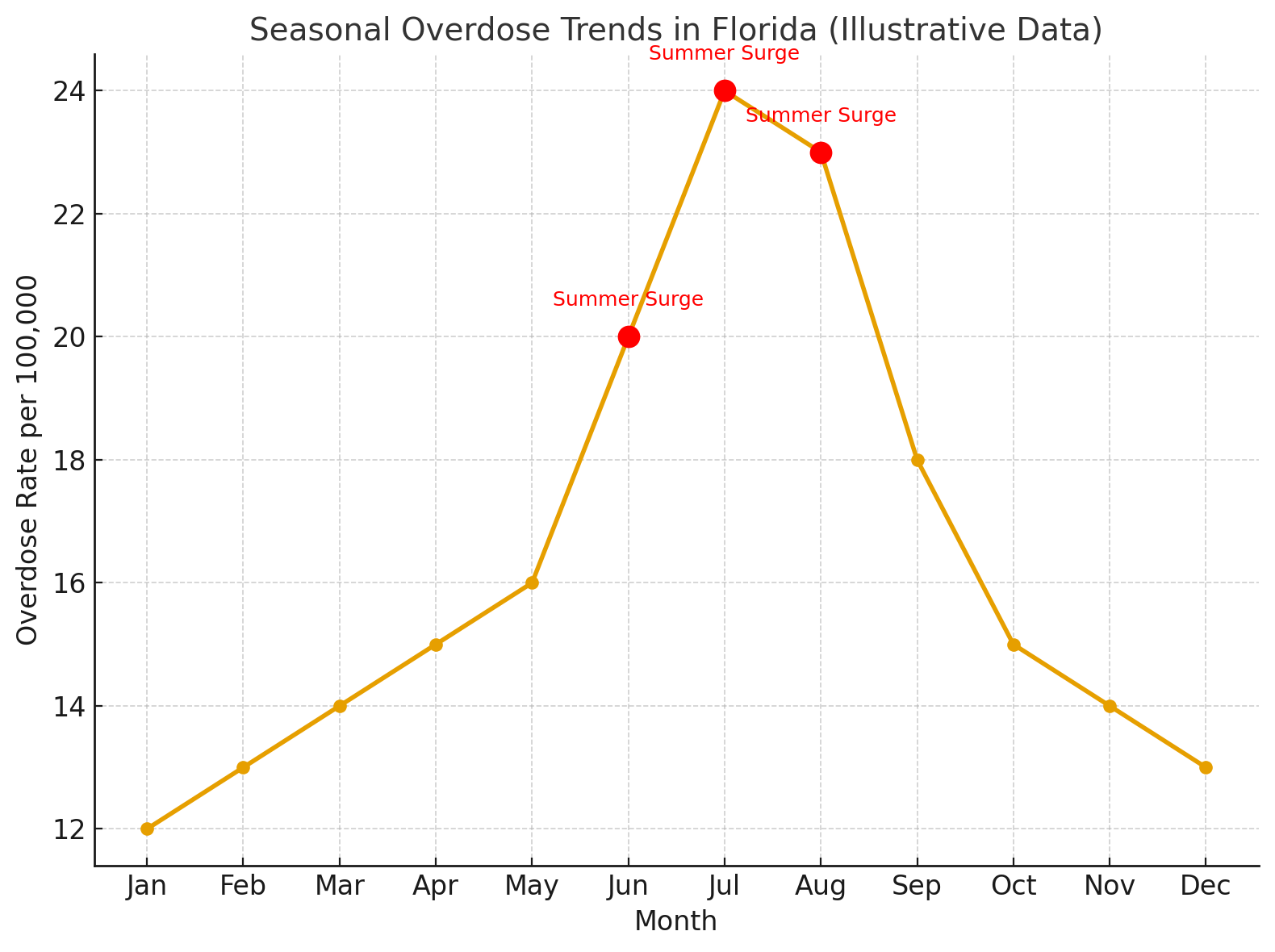
Florida is known for its long summers, but the heat brings more than just discomfort. Public health data show that overdose deaths often rise during the warmest months of the year. The Centers for Disease Control and Prevention has reported that extreme heat and seasonal stressors can increase the likelihood of drug and alcohol misuse. For families in Florida, this means summer is not only a time for vacations and school breaks, but also a season when the risk of overdose quietly climbs.
Heat Matters in Addiction and Recovery
Heat places added stress on the human body, particularly for people who are already struggling with substance use. Many drugs, including opioids, stimulants, and alcohol, interfere with the body’s ability to regulate temperature. When combined with Florida’s intense summer heat, the risk of dehydration, heatstroke, or accidental overdose rises dramatically. Stimulants like cocaine or methamphetamine elevate body temperature, while opioids slow breathing and can make it harder to respond to environmental stress.
Beyond the physical strain, the season brings unique emotional pressures. Families may be navigating the stress of children being out of school, financial demands of summer activities, or disruptions to routine. For people already in fragile recovery or actively misusing substances, these stressors can push them further toward relapse or riskier use.
Florida in the Summer Months
In Florida, the pattern is especially concerning. Overdose rates in counties like Bay, Escambia, and Okaloosa often reflect seasonal spikes, with EMS calls and hospital admissions rising during the hottest months. This is not only a problem in major cities. Rural counties across the Panhandle also face higher risk, often without the same level of access to immediate care. Longer response times in rural communities make it more likely that an overdose will turn fatal if naloxone is not available on the scene.

Treatment During High-Risk Seasons
Prevention during summer is not just about awareness, but also about providing safe and structured environments for recovery. Inpatient rehab in Florida offers individuals a place to stabilize, away from the environmental and emotional triggers that tend to intensify during summer. A supervised setting ensures that people are not exposed to extreme heat while going through withdrawal, and medical professionals can address complications that may arise.
Drug and alcohol detox in Florida is particularly important in these months. Withdrawal symptoms can cause dehydration, sweating, and changes in blood pressure, all of which are more dangerous in hot weather. At a center like Florida Springs Wellness and Recovery in Panama City, patients benefit from medical supervision that protects them from these risks while offering a clear path into longer-term treatment.
Preparing Families
Parents, spouses, and loved ones often see the warning signs before a crisis happens. During the summer, families should be especially alert to:
- Sudden changes in routine or isolation indoors during the day
- Unexplained fatigue, dizziness, or signs of dehydration
- Drug or alcohol use becoming more frequent during social gatherings or stressful events
- Mood swings or irritability tied to seasonal pressures
Families can also take proactive steps. Keeping naloxone at home, encouraging hydration, and creating supportive daily routines all reduce risk. But the most effective step remains helping a loved one connect to professional care before a crisis occurs.
Florida Springs’ Approach
At Florida Springs, the team understands that overdose risk does not remain steady throughout the year. Seasonal surges, particularly during summer, require programs that can admit patients quickly and provide a safe environment when external conditions are at their most dangerous. For those searching for inpatient rehab in Florida, the availability of comprehensive care in Panama City offers peace of mind. Families can know that their loved ones are not only medically safe during detox, but also supported through therapy, peer programs, and transition planning that carry recovery forward.
Summer in Florida brings higher temperatures and higher overdose risks. Heat, stress, and disrupted routines combine to create a dangerous environment for people struggling with addiction. Families should be aware of the seasonal surge and take proactive steps, from keeping naloxone nearby to connecting with treatment resources before a crisis occurs.
Florida Springs Wellness and Recovery Center provides drug and alcohol detox in Florida and inpatient rehab programs that offer safety, structure, and healing during the months when risk is greatest. For families across the Panhandle, knowing that help is available locally can mean the difference between tragedy and recovery.
By Tim Cannon
Resources
- CDC: Heat and Health Effects
https://www.cdc.gov/climateandhealth/effects/heat.htm - CDC: Overdose Data and Trends
https://www.cdc.gov/drugoverdose/data - Florida Department of Health: Naloxone Information
https://floridahealth.gov/programs-and-services/community-health/naloxone