Narcan is a nasal spray that can reverse an opioid overdose. You don’t need a prescription to buy it, and it has no effect on someone who hasn’t taken opioids. If you live in Bay County and know someone who uses opioids, takes prescription painkillers, or might be exposed to fentanyl without knowing it, keeping a box nearby is one of the most useful things you can do. We work in addiction treatment in Panama City, and we put this guide together for families across the Florida Panhandle.
Here is similar information in a shortform facebook post that one of our Nurse Practitioners made during overdose awareness month.
https://www.facebook.com/share/v/19k3xwZJkF/
Where to Get Narcan in Panama City
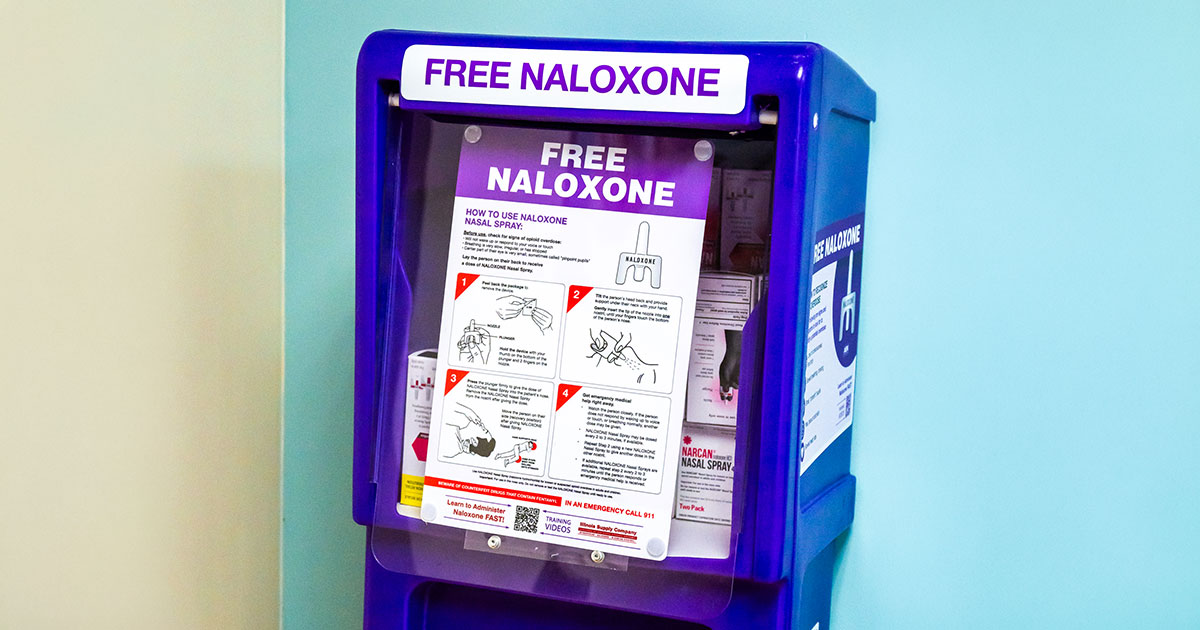
Florida Springs has Narcan available and the image that accompanies this article will be one of our Narcan distribution boxes. However, as we are a residential treatment facility, our Narcan is not as readily accessible by members of the public, so there are some other locations you should know about.
The Florida Department of Health in Bay County (DOH-Bay) offers naloxone at its office at 597 W. 11th St., Panama City, FL 32401. You can call 850-872-4455 to ask about getting naloxone for your community. That information comes from a June 2025 notice from the health department, so call before you go to confirm hours and supply.
County health departments offer naloxone kits at no cost to adults 18 and older. Another way to find naloxone anywhere in the state is the I Save FL sites, locations are available at isavefl.com.
You can also buy it. The FDA approved Narcan nasal spray for sale over the counter in March 2023, and a second nasal spray, RiVive, was approved for over-the-counter sale as well. That means you can buy it at many pharmacies without a prescription. Prices vary, so it’s worth comparing, and the health department option will cost the least. (Normally free)
Signs of an Overdose
The Florida Department of Health lists these signs:
- Small “pinpoint” pupils
- Falling asleep or losing consciousness
- Slow, weak, or no breathing
- Choking or gurgling sounds
- Cold or clammy skin
- Skin that looks discolored, especially the lips and nails
- A limp body
If you see these signs and aren’t sure what the person took, give naloxone anyway. It only works on opioids. If there are no opioids in the person’s system, it has no effect on them.
Giving Narcan
The health department’s guidance is short: call 911, give naloxone if you have it, lay the person on their side so they don’t choke, and try to keep them awake and breathing until help arrives.
The Narcan box has a quick-start guide inside. The main points are these:
- Each spray device holds one dose and only sprays once, so don’t test it first.
- Place the tip in one nostril and press the plunger firmly.
- Call 911 right after you give the first dose.
- Wait two to three minutes. If the person doesn’t wake up, give another dose from a new device in the other nostril.
- Keep giving doses every two to three minutes until they respond or help arrives. It’s safe to keep giving them.
Most boxes come with two devices. Read the leaflet before you ever need it, so the steps aren’t new to you in an emergency.
After You Give It
Naloxone wears off, and the signs of an overdose can come back. The person still needs medical care even if they wake up and say they’re fine. Stay with them until emergency crews arrive.
Calling 911 and the Law
Some people hesitate to call because they’re afraid of getting in trouble. Florida’s 911 Good Samaritan Act is meant to address that. It says a person who acts in good faith to get medical help for someone having an alcohol-related or drug-related overdose can’t be arrested, charged, or prosecuted for certain offenses. Florida law also protects a person who gives naloxone from civil liability.
The protection has limits. The Florida Department of Health’s one-page summary says the law doesn’t protect against open warrants or other crimes. We aren’t lawyers, and this is not legal advice. The point is that calling is what the law encourages you to do.
Keep Some at Home
Florida’s Department of Children and Families reports that as of June 2024, naloxone it distributed had saved a life more than 53,000 times, and more than 1.1 million free kits had been given out. Keep a box where you can reach it quickly, tell the people in your home where it is, and check the expiration date now and then.
If someone you love has overdosed, or you’re worried they might, our residential program for drug and alcohol rehab is in Panama City, and we talk with families as well as with people who are using.