Completing detox is a major achievement, and nobody should lessen that, but it is the beginning of recovery. Many people feel ready to move on after finishing medical detox. Finishing detox can bring restlessness about being in treatment, and just that short period away from drugs and alcohol can give a person a feeling of invincibility, like you are ready to take on the world. However, clinical data shows that individuals who stop treatment after detox face a much higher risk of relapse. Continuing care through inpatient residential treatment or outpatient addiction treatment will provide the structure and accountability needed to support long-term sobriety.
Detox Often Is Not Enough
Our medical detox in Panama City provides a safe environment for people to manage withdrawal symptoms and begin recovery. It focuses on physical stabilization, helping the body adjust to the absence of drugs or alcohol. However, detox does not address the psychological, emotional, and social sides of addiction. Once withdrawal symptoms have eased, individuals must begin learning coping and behavioral skills that they will use for the rest of their lives.
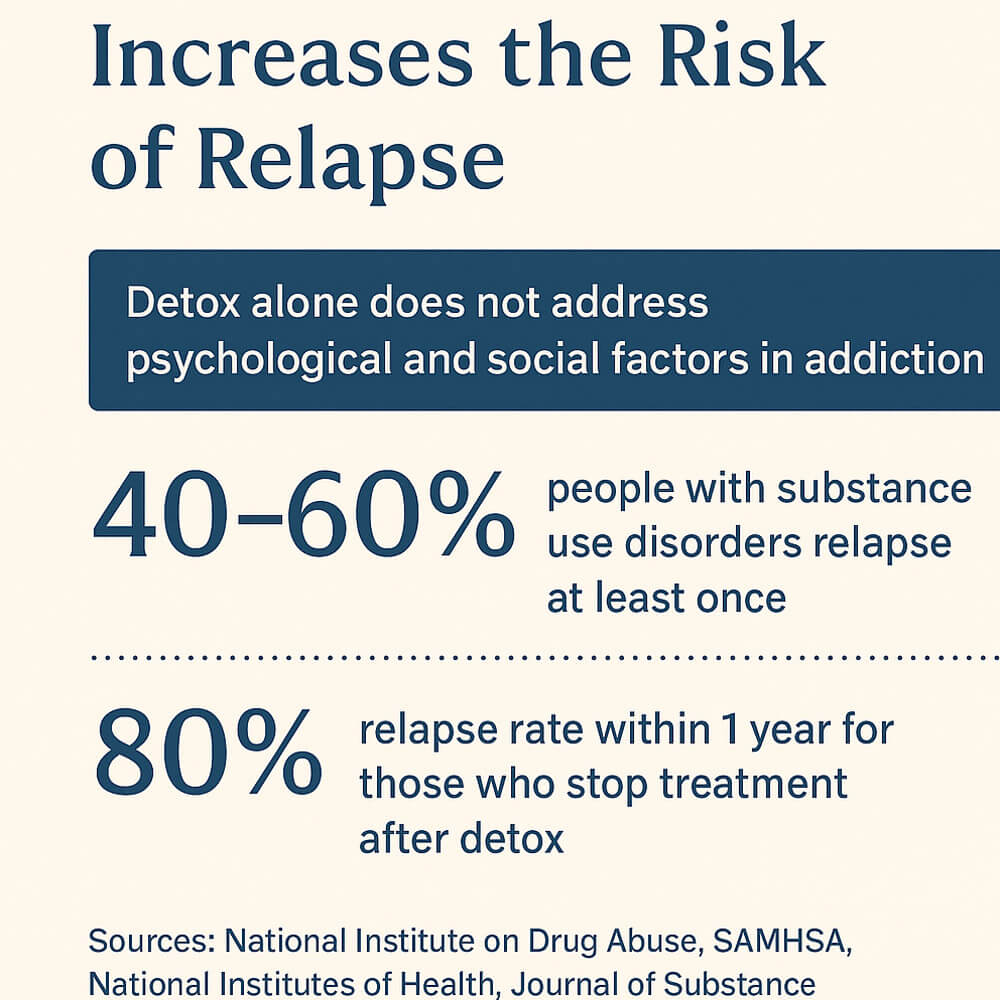
Research from the National Institute on Drug Abuse shows that 40 to 60 percent of people with substance use disorders relapse at least once, and individuals who stop treatment after detox are far more likely to return to substance use within weeks. Studies from SAMHSA and the National Institutes of Health show that short-term detox without follow-up care can result in relapse rates as high as 80 percent within one year.
Detox prepares the body, but aftercare and counseling strengthen the mindset, daily habits, and support systems that help recovery last.
Continuing Care
Continuing care after detox offers the support that reinforces recovery skills. At Florida Springs, outpatient addiction treatment in Florida helps clients build on the progress made during detox and residential treatment. Outpatient counseling includes therapy, group support, and relapse-prevention planning led by licensed clinicians familiar with the challenges of early recovery.
A long-term study of individuals completing detox or inpatient treatment found that those who participated in at least 90 days of structured continuing care were twice as likely to maintain sobriety after one year compared to those who did not. Ongoing support increases self-confidence and recognition of relapse triggers.
Accountability and Connection
Addiction often thrives in isolation. Outpatient counseling provides accountability through regular check-ins and peer support. This ongoing contact helps individuals stay focused on recovery goals and identify challenges early.
SAMHSA’s National Recovery Survey shows that consistent participation in counseling or support groups cuts relapse risk by nearly half. This reinforces the importance of staying connected after medical detox in Florida and during the transition back to everyday life.
The Florida Springs Step-Down Model
At Florida Springs Wellness and Recovery Center, every stage of care works together. Clients begin with medical detox in Panama City, move into residential treatment to build daily routines and stability, and then transition into outpatient counseling for continuing support. This step-down model reflects the most effective national treatment standards and ensures that care does not end abruptly once detox is complete.
Leaving detox without a plan for continued treatment raises the risk of relapse. Florida Springs ensures a clear pathway through every level of care so individuals stay engaged and supported throughout early recovery and beyond.
Building a Lifelong Foundation
Recovery is a long-term process that requires continued effort. Skipping aftercare leaves individuals vulnerable during a period when cravings, emotional stress, and life changes can make sobriety difficult to maintain. Continuing participation in outpatient counseling after detox significantly improves outcomes. National recovery data shows that people who stay connected to structured treatment for at least six months have relapse rates 30 to 50 percent lower than those who stop early.
Florida Springs is committed to supporting each client through medical detox, residential treatment, and outpatient counseling, providing steady guidance during every phase of recovery.
Begin the Next Step in Recovery
If you have completed detox or residential treatment, staying engaged in counseling is the next important step. Florida Springs Wellness and Recovery Center offers structured programs that support long-term stability and personal growth.
Call (850) 403-6566 to learn more about medical detox in Panama City and outpatient addiction treatment in Florida, or contact our admissions team to begin planning your recovery today.
By Tim Cannon